

The world of technology is in constant evolution, and the devices we use daily are no exception.
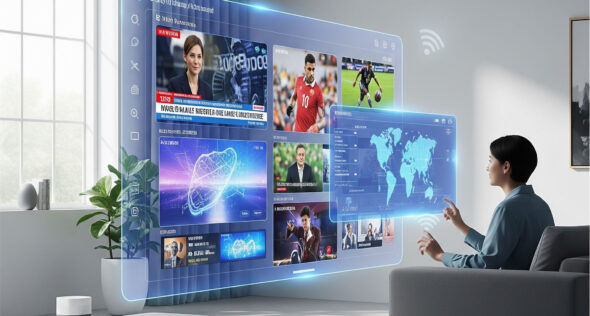
By 2034, we may say goodbye to traditional TVs and monitors, replaced by virtual displays powered by augmented reality (AR) and mixed reality (MR). This transformation will not only redefine how we consume media but also revolutionize the entire digital work ecosystem. Devices like Meta Quest 3 and Apple Vision Pro already showcase the potential of this technology, offering immersive experiences with floating virtual screens and customizable environments.
The Advantages of Virtual Displays
Customization and Portability
Virtual displays adapt perfectly to user needs, allowing you to resize or reposition screens instantly. You can turn a huge panoramic display into a compact workspace in seconds ideal for watching a movie or managing emails without physical clutter. Portability is another major advantage: you can take your “screen” anywhere without the bulk of a TV or monitor.
Immersive Experiences
The true appeal of virtual displays lies in their immersive power. AR and MR headsets deliver high-quality visual experiences that transform a living room into a personal cinema. Beyond entertainment, sectors like education, training, and healthcare are already leveraging immersive environments for realistic simulations and hands-on learning.
Current Limitations and Future Outlook
Technical Barriers
There are still challenges: current headsets can be heavy, uncomfortable, and limited in shared virtual interaction. However, progress in optics, processors, and ergonomics is advancing quickly, and these issues are expected to diminish soon.
Evolution of Headsets
Future AR devices will be lighter, more discreet, and closer to standard glasses, paving the way for widespread adoption. This evolution will make augmented reality a natural part of daily life, enabling people to interact digitally in intuitive and seamless ways. Industry leaders are already investing heavily in research and development to improve comfort, display quality, and interactivity.
Market Transition and Impact
The emergence of virtual displays marks the beginning of an inevitable transition. Traditional TV and monitor sales are expected to decline as consumers move toward flexible and immersive alternatives. This shift will reshape the entire consumer electronics market, pushing companies to innovate and integrate mixed reality into their product strategies.
New Opportunities and Emerging Sectors
The rise of virtual displays will open doors to new creative and interactive possibilities. Developers, designers, and content creators will be able to build fully interactive digital environments, creating experiences that blend the physical and virtual worlds. Sectors such as entertainment, education, architecture, and healthcare will benefit from increased efficiency, accessibility, and engagement.
Social and Cultural Implications
The spread of virtual displays will also transform social interaction and collaboration. Shared digital environments could become new meeting spaces, changing how people communicate and connect. However, these innovations must be balanced with privacy, security, and ethical considerations to ensure responsible use of immersive technologies.
Toward a New Digital Horizon
We are at the dawn of a revolution that will redefine the relationship between humans and technology. Mixed reality and virtual displays will lead to a world where digital experiences are fully customizable, fluid, and interactive. The screen as we know it will disappear replaced by an infinite digital space of imagination and innovation.